How a Toilet Squat Stool Works
The simple idea behind the SquatEase toilet stool — and why your body may prefer it.
The idea, in plain language
Modern toilets are designed for comfort while sitting upright — feet flat on the floor, knees bent at roughly a right angle. But the human body evolved to rest in a deeper squat when doing its business, a posture where the knees rise higher and the torso leans gently forward.
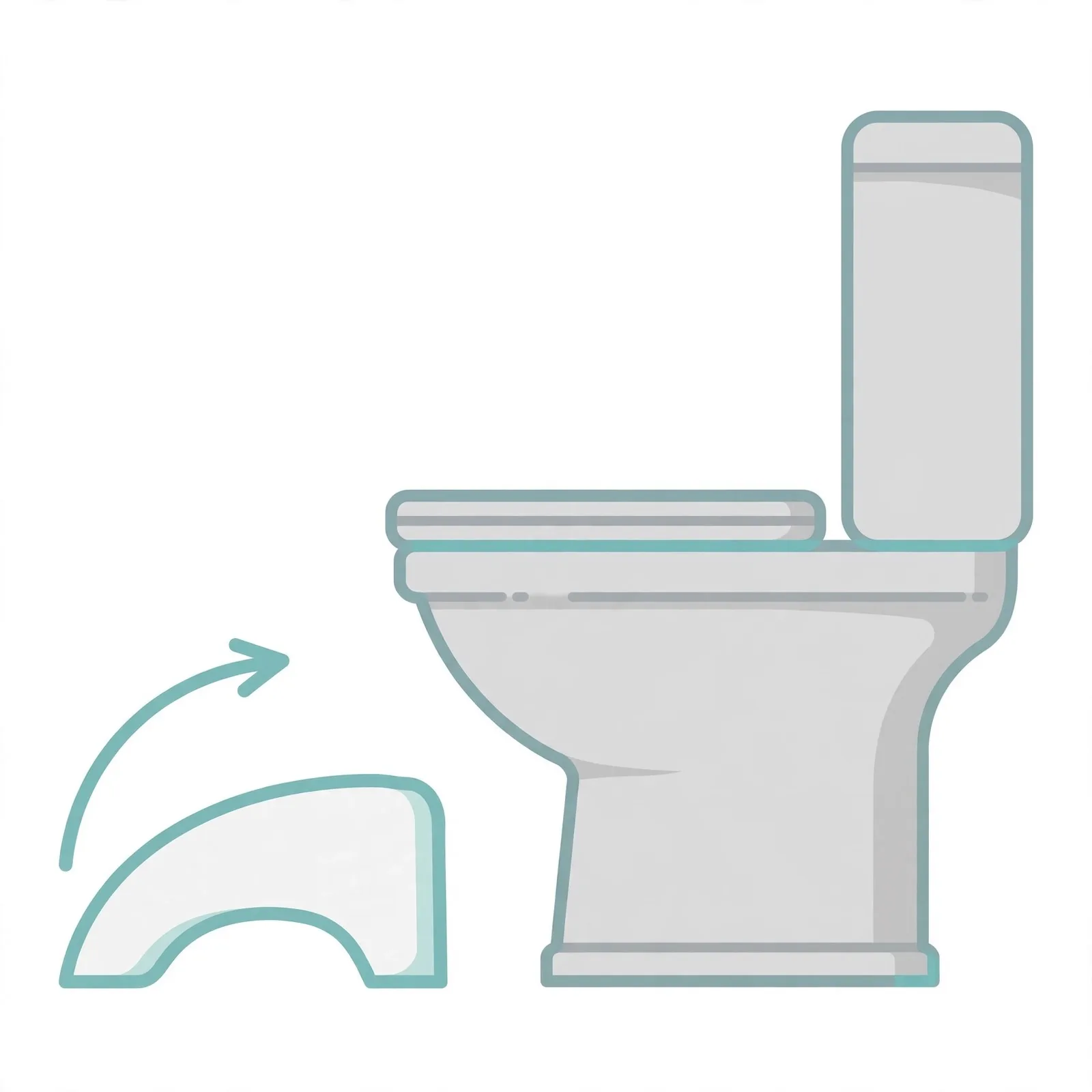
A toilet squat stool doesn't change your toilet. It simply gives your feet a raised platform, so your knees lift and your body settles closer to that natural squatting posture while you stay comfortably seated. Think of it as meeting your body halfway: the convenience of a modern toilet with the posture your body recognizes.
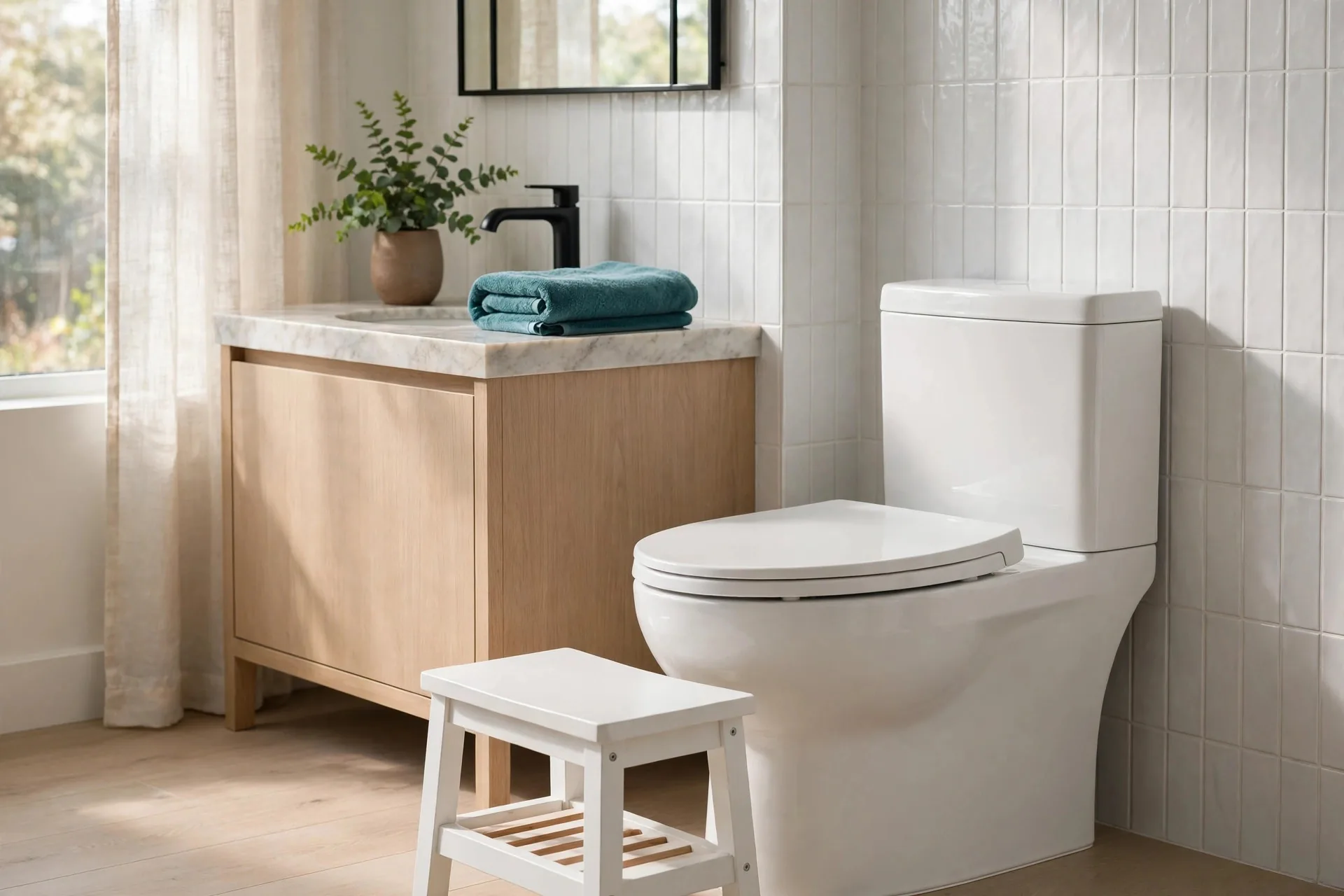
Why posture matters in the bathroom
When you sit fully upright, the muscles around your lower body stay relatively tense — they're holding you in a seated working position. In a deeper squat-like posture, those same muscles can relax more fully, which many people experience as simply "easier" and more comfortable bathroom time.
This isn't a medical treatment or a cure for anything — it's just posture. Like choosing an ergonomic chair for your desk, a toilet stool is an ergonomic choice for your bathroom: small adjustment, everyday comfort.
Three steps to comfortable
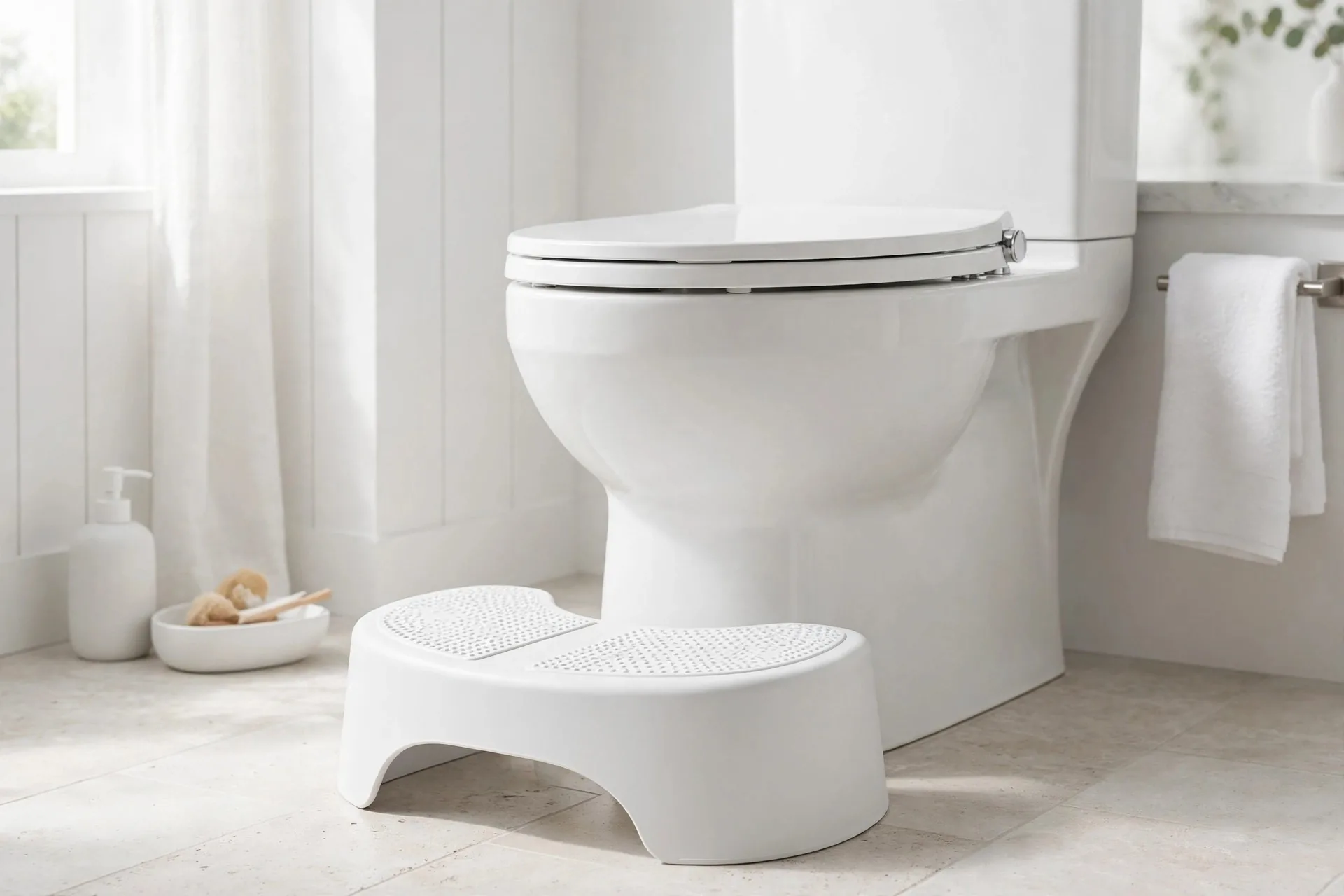
Place
Set the stool at the base of your toilet. No tools, no assembly, no installation.
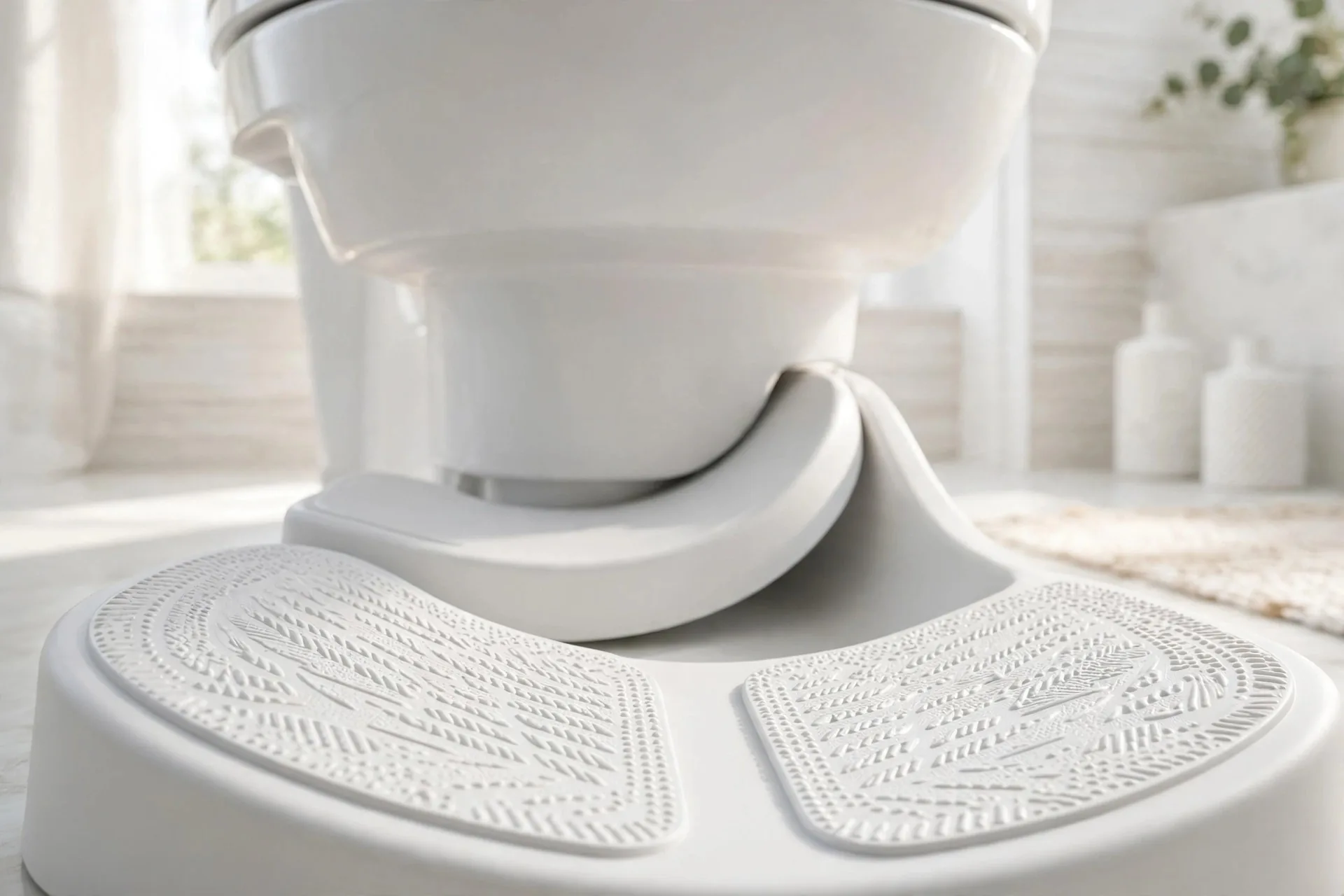
Sit
Sit down as usual and rest your feet on the platform. Your knees rise into a more natural position.
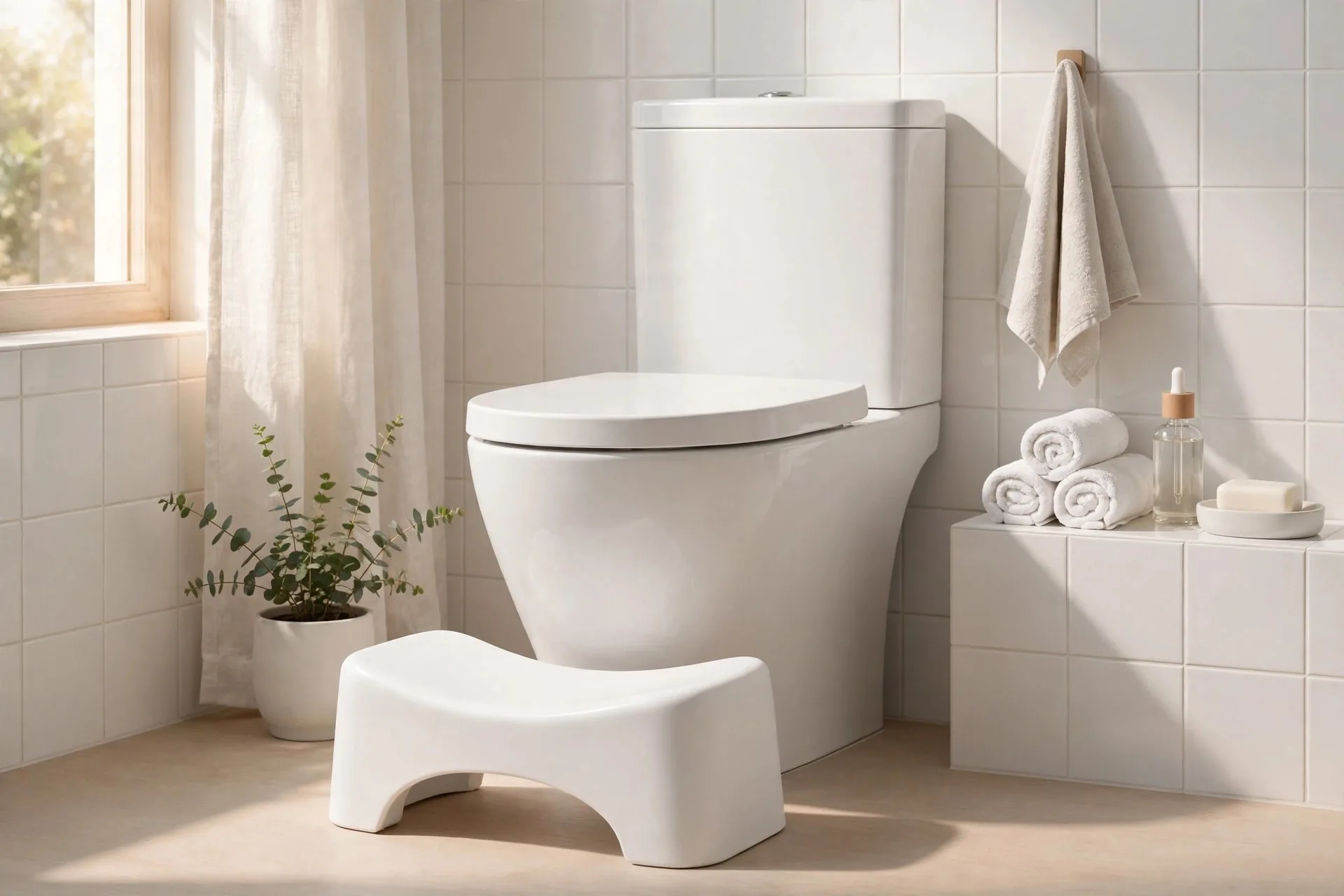
Relax
Let your posture settle. Give it a few days — most people say it feels completely natural within a week.
What to expect in the first week
- Days 1–2: The new foot position feels novel. That's normal — your body is learning a slightly different habit.
- Days 3–5: Placing your feet becomes automatic, like reaching for the seatbelt in your car.
- Day 7+: Most people stop thinking about the stool entirely — it just becomes part of the bathroom.